
News & InsightsPanelist Spotlight
What Happens After the Procedure: Dr. George Ciresi on Rehabilitation
Surgery and injections get the attention. The months afterward decide the result. Dr. George Ciresi has built three practices around that stretch of the timeline.
Every other discipline on this panel hands its patients to physical therapy eventually.
That is not a hierarchy, it is a sequence. A well-executed procedure creates an opportunity, and rehabilitation is what converts the opportunity into a result. It is also the longest stretch of the patient’s experience by a wide margin: a procedure is measured in hours, recovery in months, and almost all of the work happens after the specialist has moved on to the next case.
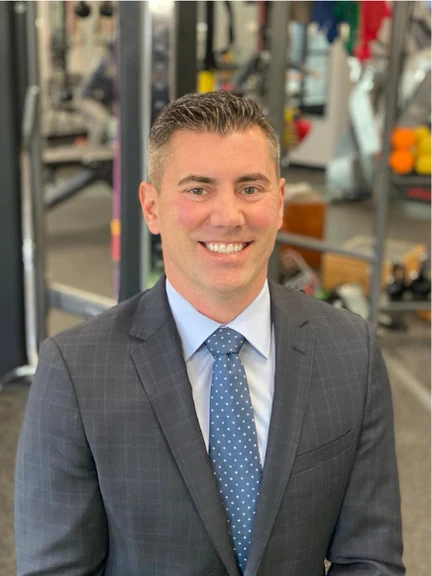
Dr. George Ciresi is the co-founder and co-owner of Professional Care Physical Therapy, ProCare Occupational Therapy, and ProCare Athletic Performance. He specializes in orthopedic rehabilitation, sports injuries, and manual therapy.
Three practices, one arc
The structure of those three businesses is itself an argument about care.
Professional Care Physical Therapy handles orthopedic rehabilitation, the restoration of function after injury or surgery.
ProCare Occupational Therapy addresses the part people actually care about, which is not range of motion in the abstract but whether they can do the specific things their life requires.
ProCare Athletic Performance picks up where rehabilitation stops. Discharge from therapy is not the same as being ready to return to sport, and the space between those two points is where a great many re-injuries live.
Taken together they cover a patient from the acute phase through to full return, rather than handing them off at each boundary and hoping the next person catches them.
Manual therapy and the value of hands
Manual therapy is hands-on assessment and treatment, and its quiet advantage is diagnostic as much as therapeutic. A clinician working directly on tissue gets information no questionnaire produces: what is genuinely restricted rather than reported as restricted, what has changed since last week, how a patient responds to load in real time.
That information arrives at a frequency no other discipline on this panel enjoys. A surgeon may see a patient three times in a year. A physical therapist may see them three times in a week, which makes therapists the early warning system for a recovery that is drifting off course.
His focus areas are:
- Orthopedic rehabilitation
- Sports injuries
- Manual therapy
- Clinical instruction
Teaching, and the community around it
That fourth item belongs on the list. Dr. Ciresi is a Clinical Instructor and an active member of the American Physical Therapy Association, and a recipient of Sacred Heart University’s Alumni Achievement Award for his professional accomplishments and community service.
Clinical instruction is how a standard of care spreads. Every student who trains in a practice carries its habits into wherever they go next, which makes a teaching clinician’s reach considerably wider than their own appointment book.
The seat that sees the outcome
If the panel has a seat with the clearest view of whether the rest of the system worked, this is it. Physical therapy inherits the results of every decision made upstream, including the ones nobody upstream ever hears about.
Getting that feedback into the same room as the clinicians making those decisions is the whole reason for an interdisciplinary evening.
Connecting the DOTS
Dr. Ciresi joins six other clinicians for Connecting the DOTS at The Piermont in Babylon on Thursday, September 10, 2026, from 5:00 PM to 9:00 PM, with the panel from 7:15 PM to 8:15 PM. All ticket proceeds benefit the Curvy Girls Scoliosis Foundation.