
News & InsightsPanelist Spotlight
The Nervous System Has a Seat at the Table: Rebecca Perry on Therapeutic Bodywork
Massage therapy is the discipline on this panel that patients reach for first and clinicians discuss last. Rebecca Perry makes the case for moving it up the conversation.
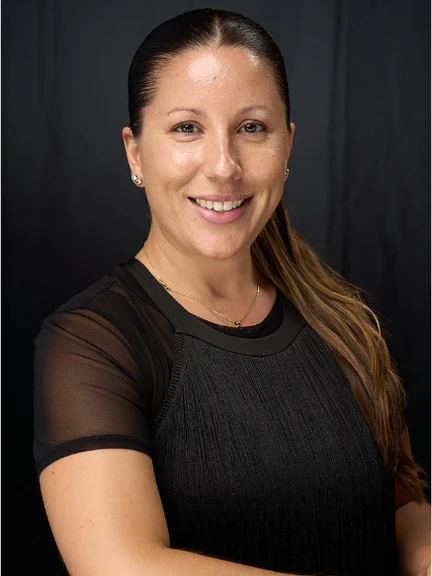
Of the seven clinicians on this year’s panel, one is likely to have seen a patient long before anyone else did.
People in pain reach for bodywork early. It is accessible, it does not require a referral, and it is often the first place someone goes when something has started to hurt and they are not yet ready to call it a medical problem. That makes a licensed massage therapist an unusually early observer of a pain story, and an unusually rare voice in the rooms where those stories get discussed.
Rebecca Perry, LMT, practices on Long Island at The Shen Den, specializing in therapeutic and Asian bodywork.
Working with the system that is holding the pattern
Her practice blends clinical techniques with nervous-system-focused modalities, and that phrase is the key to it.
Persistent pain is not only a tissue problem. A body that has been guarding an area for months has usually recruited the nervous system into the arrangement: muscles held at a low, constant brace, sleep that never quite gets deep, a startle response set slightly too high. At that point, treating the tissue while ignoring the state it is being held in tends to produce relief that does not last the drive home.
Bodywork that is aimed at the nervous system is working on that layer directly. The goal is not only to release a muscle but to persuade a system that has been on alert that it can stand down. Perry’s stated aims are to help clients relieve pain, reduce stress, and reach deep relaxation, and the third of those is not a luxury item on the list. It is frequently the mechanism.
Safety and trust as clinical variables
Her approach emphasizes safety, trust, and restoring balance through intentional, tailored bodywork.
It is easy to read that as bedside manner. It is closer to a working condition. A person who is braced against the treatment cannot receive it. Someone who does not trust that they will be listened to will not report the thing that matters, and someone who is not comfortable will not down-regulate no matter what technique is applied. For nervous-system work in particular, the felt sense of safety is not the setting in which the treatment happens. It is a large part of the treatment.
Her focus covers:
- Therapeutic bodywork
- Asian bodywork
- Nervous-system-focused modalities
- Stress and pain relief
Why the panel is better with this seat on it
An interdisciplinary panel about pain that contains only prescribers and proceduralists is not actually interdisciplinary. It is one discipline with several accents.
Bodywork brings a genuinely different vantage: hands-on, high-frequency, unhurried, and observing the same body over many sessions rather than at intervals of weeks. Therapists notice patterns that a fifteen-minute visit cannot, and they see what a patient does when they are not performing being a patient.
Getting that perspective into the same conversation as neurosurgery, pain management, physiatry, orthopedics, neurology, and physical therapy is exactly what Connecting the DOTS is named for.
Connecting the DOTS
Rebecca Perry joins six other clinicians at The Piermont in Babylon on Thursday, September 10, 2026, from 5:00 PM to 9:00 PM, with the panel from 7:15 PM to 8:15 PM. All ticket proceeds benefit the Curvy Girls Scoliosis Foundation.