
News & InsightsPanelist Spotlight
Precision You Can See: Dr. Sunil Albert on Image-Guided Spine Care
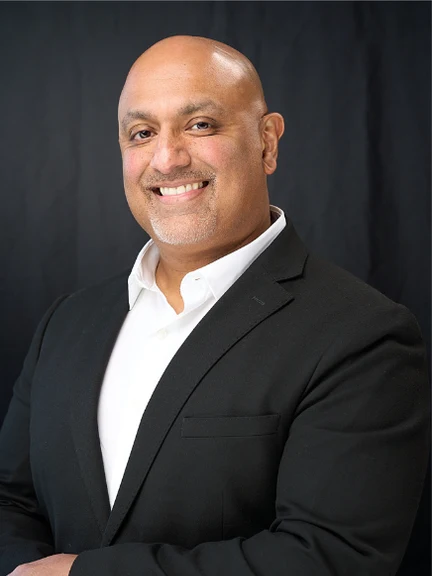
Physical Medicine and Rehabilitation is the specialty most patients have never heard of and many of them need. Dr. Sunil Albert has practiced it since 2007.
Ask a room of people what a physiatrist does and most of them will guess wrong.
Physical Medicine and Rehabilitation, PM&R, is the specialty concerned with function. Not a single joint or a single system, but what a person is able to do, and what is standing between them and doing more of it. It occupies a genuinely useful position in pain care: more procedural than physical therapy, less invasive than surgery, and interested in the whole arc rather than one appointment on it.
Dr. Sunil D. Albert is board-certified in PM&R and practices at National Spine & Pain Centers, with advanced training from Stony Brook University and New York Pain Consultants. He has been practicing since 2007 and currently serves the Babylon Village community, a few minutes from the room where this year’s symposium is being held.
Guidance is the whole point
His clinical focus is interventional spine and musculoskeletal procedures performed under image guidance, using fluoroscopic and ultrasound-guided techniques.
That distinction matters more than it sounds. An injection placed by landmark and feel is an educated estimate. The same injection placed under live imaging is a procedure the clinician can watch arrive where it was intended to go. Fluoroscopy gives a real-time X-ray view of bony structures; ultrasound shows soft tissue, and shows it moving.
Two consequences follow. The first is accuracy, and the confidence to work near structures where accuracy is not optional. The second is diagnostic: when a well-placed, well-documented intervention does not do what was expected, that is real information about the source of a patient’s pain rather than an open question about whether the needle went to the right place.
Comprehensive and integrative, in the specific sense
Dr. Albert describes his approach as comprehensive, integrative pain management. Both words are worth taking literally in a PM&R context.
Comprehensive, because the specialty is trained to look at function across systems rather than treat a region in isolation. Integrative, because the procedures are a component of a plan rather than the plan itself, sitting alongside rehabilitation and the rest of a patient’s care.
His focus areas are:
- Interventional spine procedures
- Musculoskeletal procedures
- Fluoroscopic guidance
- Ultrasound-guided techniques
The seat between
The most useful thing about a physiatrist on an interdisciplinary panel is where the specialty sits. PM&R routinely shares patients with physical therapy on one side and with surgery on the other, and is often the discipline deciding which direction a case should go.
That makes it one of the few seats on the panel with a working view of nearly every other seat. Put it next to a neurosurgeon, an orthopedic surgeon, a pain management specialist, a physical therapist, a neurologist, and a massage therapist, and the handoffs that usually happen by referral letter happen in conversation instead.
Connecting the DOTS
Dr. Albert joins six other clinicians for Connecting the DOTS at The Piermont in Babylon on Thursday, September 10, 2026. Doors at 5:00 PM, panel from 7:15 PM to 8:15 PM, with dining and exhibits through the evening. All ticket proceeds benefit the Curvy Girls Scoliosis Foundation.