
News & InsightsPanelist Spotlight
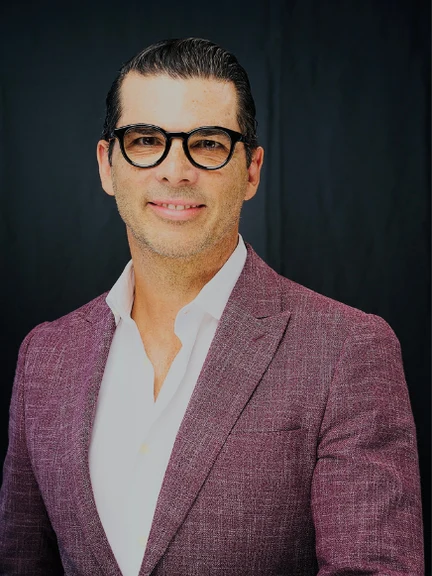
Treating the Cause, Not Only the Signal: Dr. Luis Fandos on Interventional Pain Care
A pain signal is information, not a diagnosis. Dr. Luis Fandos builds his practice around the difference, and brings that view to the panel on September 10.
Pain is the reason most people finally make the appointment. It is rarely the reason they are unwell.
That gap, between the signal a patient can point to and the cause underneath it, is where Dr. Luis Fandos has built his practice. He is a double-board-certified pain management specialist and the Medical Director of Alluring Age, and his work sits deliberately across two fields that are usually kept in separate buildings: advanced interventional pain therapies on one side, functional medicine on the other.
Two toolkits, one patient
Interventional pain medicine is precise and procedural. It offers minimally invasive spine procedures and regenerative treatments that can interrupt a pain pathway, calm an inflamed structure, or buy a patient the window they need to move again.
Functional medicine asks a different question. Not where does it hurt but why is this body in this state, and it looks at the systems, habits, and inputs that shaped the answer.
Neither view is complete on its own. A procedure that relieves a symptom without addressing what produced it can leave a patient cycling back. A whole-body plan that ignores a structural problem can leave someone in genuine pain while they wait for it to work. Dr. Fandos’s approach is to hold both at once: identify root causes of chronic pain, restore mobility, and treat the person rather than the region of the body they came in pointing at.
What that looks like in practice
His clinical focus covers four areas that reinforce each other:
- Interventional pain therapies, the procedural work that addresses a specific pain generator directly.
- Minimally invasive spine procedures, which aim to achieve that with the least disruption to surrounding tissue.
- Regenerative treatments, working with the body’s own repair capacity.
- Personalized functional medicine plans, built around the individual rather than the diagnosis code.
The through-line is optimization of mobility. Pain that keeps someone still tends to compound: the less a body moves, the less it tolerates movement, and the smaller the patient’s world gets. Restoring the capacity to move is not a bonus outcome alongside pain relief. For a lot of patients it is the outcome.
Why this seat matters on the panel
The 2026 Pain Management Symposium is built around a single premise, which is that pain care on Long Island happens in disciplines that rarely share a room. A patient’s path routinely runs through a primary care office, an imaging center, a surgeon, a physical therapist, and a bodyworker, and each of those clinicians typically sees one segment of it.
The interventional pain seat is one of the places where those paths converge. It is where a patient often arrives after conservative care has not been enough and before surgery is on the table, which makes it a natural vantage point on the whole route. Putting that seat next to a neurosurgeon, a physiatrist, a physical therapist, a massage therapist, an orthopedic surgeon, and a neurologist is the entire point of the evening.
Connecting the DOTS
Dr. Fandos joins six other clinicians for Connecting the DOTS at The Piermont in Babylon on Thursday, September 10, 2026. The evening runs from 5:00 PM to 9:00 PM, with the panel itself from 7:15 PM to 8:15 PM, and includes dining and exhibits alongside the discussion.
All ticket proceeds benefit the Curvy Girls Scoliosis Foundation.